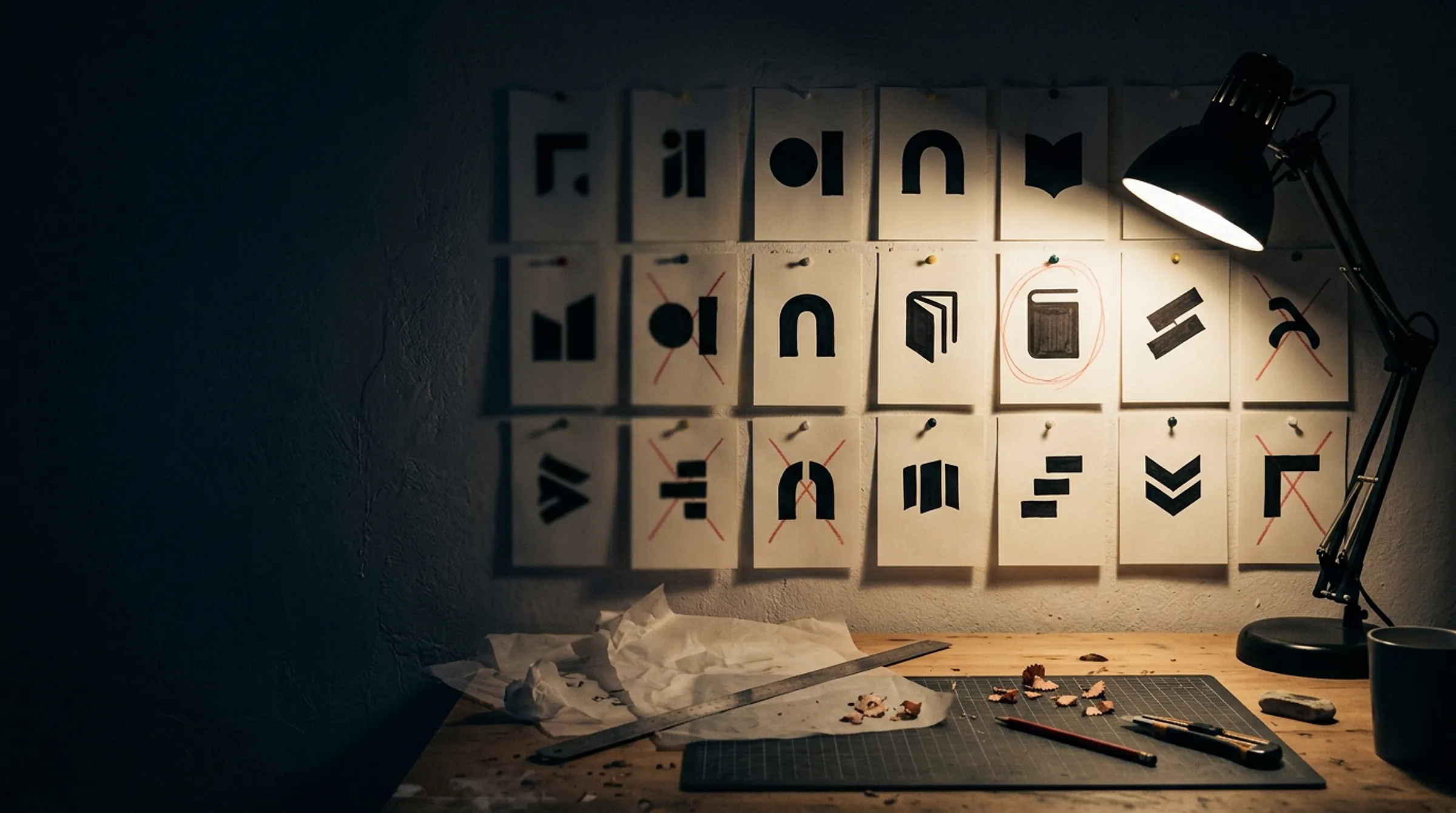
A designer's wall of pinned black-and-white logo sketches at night, several crossed out in red pencil, under one desk lamp

In build · Waitlist open

A logo you can explain.

A squad of AI designers runs a professional eight-step method and scores every concept before you see it.

Scroll to see how it works

Round one

Most sketches never reach you.

Eight first ideas for a made-up bindery. The best scored 51 of 75. The bar is 60.

Round 9

The one that does comes with its reasons.

61 of 75Every gate passed

Step 4ScoreCritic

Example · made-up businessPreview · in build

Quillfen Bindery

Round 9 · sketch 2 of 8

61of 75

The gate

Fail one and the idea goes back to Sketch.

  • Appropriate comes firstPass
  • Make it distinctivePass
  • Keep it simplePass

Stress tests

Small, reversed, blurred, and from memory.

  • It still reads when tinyPass
  • It works in one colorPass
  • It works reversedPass
  • It survives a blurPass
  • Someone can draw it from memoryPass
  • It is not a known markPass

The 75 points

  • Make it distinctive7 of 10
  • Keep it visible9 of 10
  • It has to adapt9 of 10
  • Make it memorable7 of 10
  • Keep it universal7 of 10
  • Aim for timeless8 of 10
  • Keep it simple14 of 15

The Critic's real scorecard for a made-up business, shown as a preview of the Score step. The product is in build.

One logo, start to finish

We ran the method for a made-up bookbinder.

Quillfen Bindery does not exist. The run does. These are the sketches the squad drew and the scores the Critic actually gave, round by round.

72sketches
9rounds
1reached the client

01 · Round one

Eight first sketches. None reached the client.

The first ideas are the obvious ones: books, needles, presses. To reach you, a sketch has to pass all three gate checks and score at least 60 of 75. The best of round one scored 51.

  1. 46

    Thread tail46 of 75

    A closed book with a ribbon tail. It reads as a stock book icon, and at 16px the tail no longer reads as thread.

    Failed the gate: make it distinctive.

  2. 40

    Signature40 of 75

    A folded signature with one stitch. The ring is the idea, and it breaks apart at 16px.

    Cleared the gate, but 40 is under the bar of 60.

  3. 51

    Press51 of 75

    It clears the gate. The press still reads at 16 pixels. The page lines inside the book do not, and the symbol is not distinctive enough to sit at the top of the scale.

    Cleared the gate, but 51 is under the bar of 60.

  4. 40

    Needle40 of 75

    A sewing needle. It fits a tailor as well as a bindery, and the thread turns to noise at 16px.

    Failed the gate: appropriate comes first, make it distinctive.

  5. 27

    Headband27 of 75

    The shape does not read as a book or a headband. There is nothing clear to remember.

    Failed the gate: appropriate comes first, make it distinctive, keep it simple.

  6. 47

    Kettle stitch47 of 75

    A thread loop on a book. It is the clearest idea at full size, and the loop falls apart at 16px.

    Cleared the gate, but 47 is under the bar of 60.

  7. 50

    Open book50 of 75

    An open book. It holds up small, and it could belong to any library.

    Failed the gate: make it distinctive.

  8. 27

    Bone folder27 of 75

    A bone folder and a sheet, plus stray lines the trace kept. It does not hold together at 16px.

    Failed the gate: keep it simple.

02 · Rounds two to 9

Redrawn until one passed. Simpler every time.

After each round the Sketcher redrew from the Critic's reasons: fewer parts, wider gaps, nothing that breaks when small. This is the best score of each round.

Best score, cut Reached 60, failed a gate Cleared every check

03 · Round 9

Two shapes. A rounded spine and a cover.

Look at a hardback from the top and you see a rounded spine against a flat board. The mark keeps only that. It is not the stock book icon, and it holds up where the first sketches broke.

61of 75

All 3 gate checksAll 6 stress tests

A round spine beside a cover. The circle and the board stay separate at 16px, reversed, and blurred. It is abstract, and it is not the stock book icon. 61 of 75.

The Critic, round 9
The mark rendered at 16 pixels, enlargedActual size
At 16 pixels Pass
The mark reversed, white on black
Reversed Pass
The mark blurred
Blurred Pass
One color Pass

04 · Then it goes to work

Now the circle and the slab make sense.

A mark earns its keep on real things. This is the round-9 mark, exactly as scored, on five things a bindery would use. Mockups. Quillfen Bindery is made up.

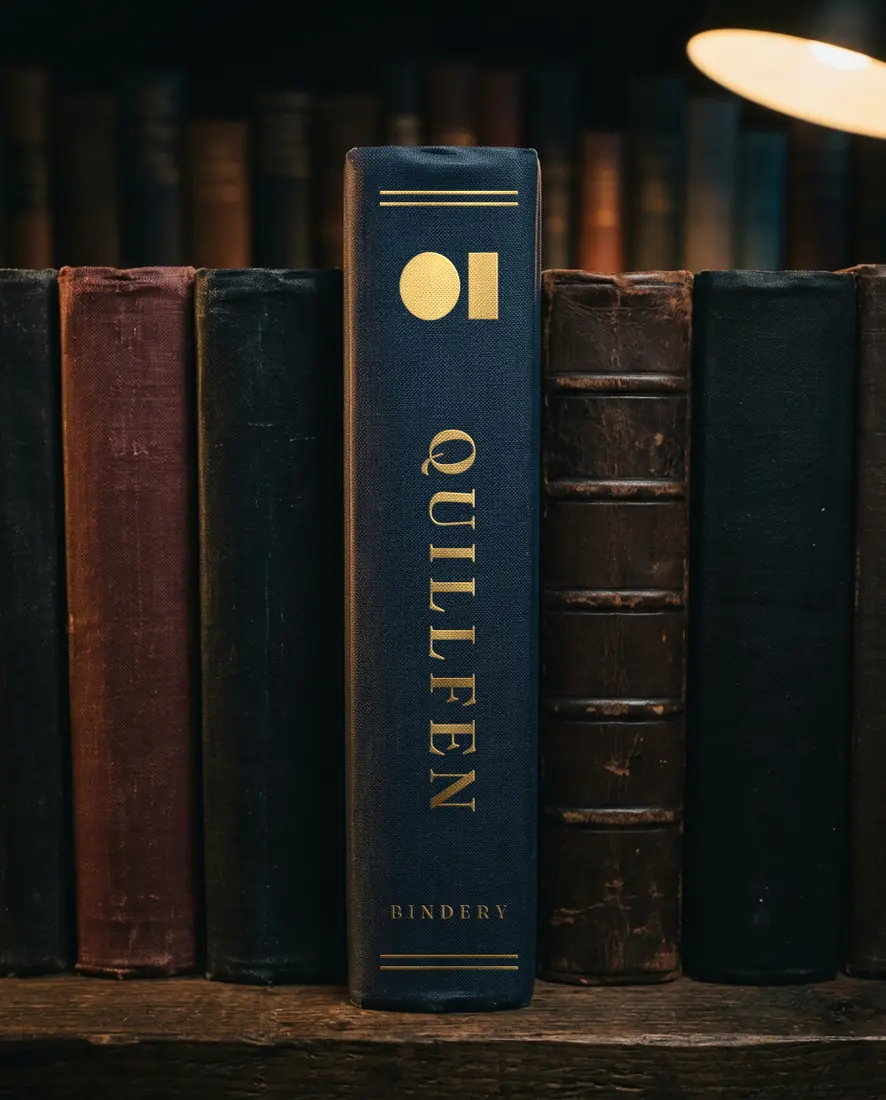
A shelf of old books at night; the middle spine is navy cloth stamped in gold foil with the mark and QUILLFEN BINDERY
Cloth spine, foil stampedMockup
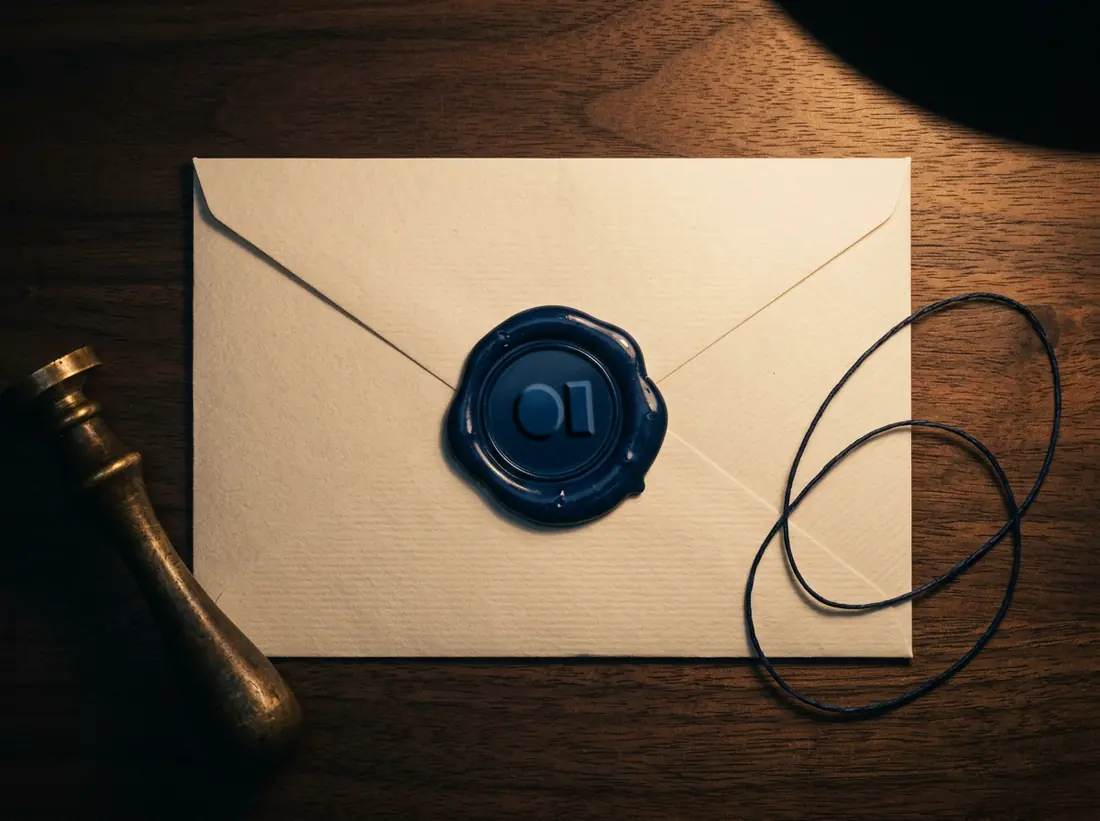
A cream envelope closed with a navy wax seal pressed with the mark, beside linen thread and a brass seal handle
Wax sealMockup
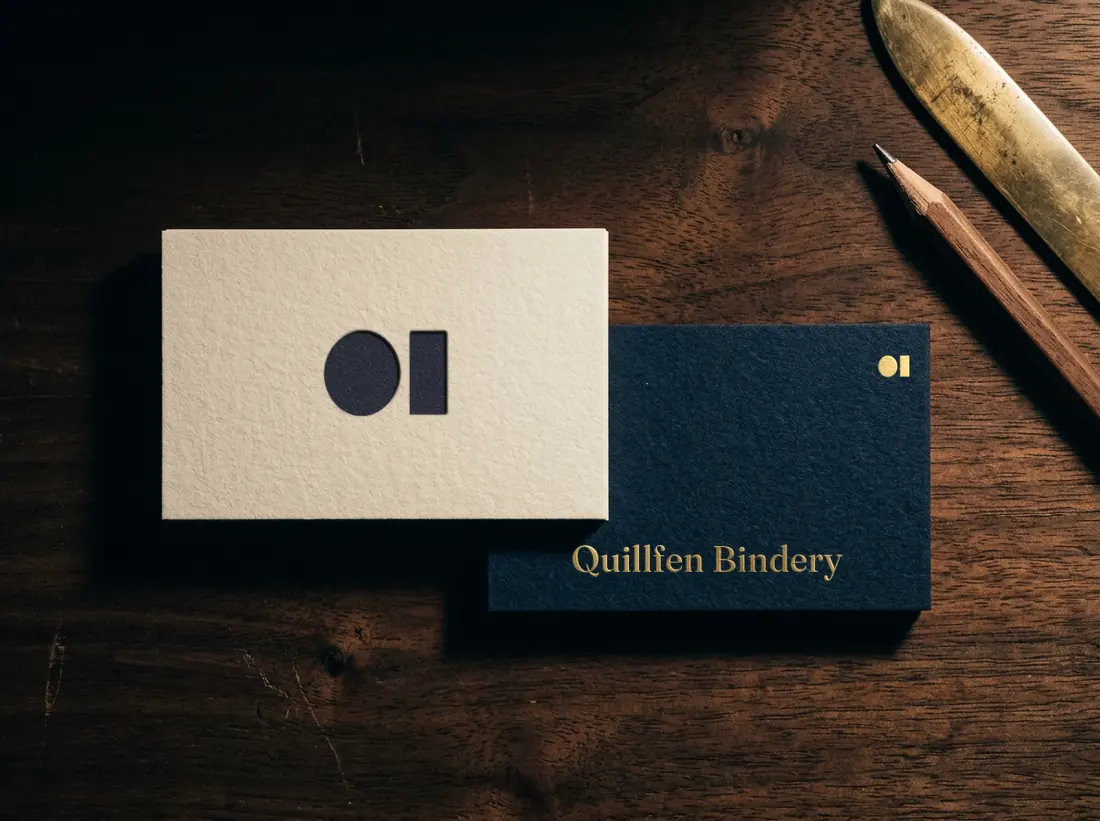
Two cotton business cards on a walnut desk: a cream card with the mark letterpressed deep, and a navy card foil stamped with a small mark and Quillfen Bindery
Business cardsMockup
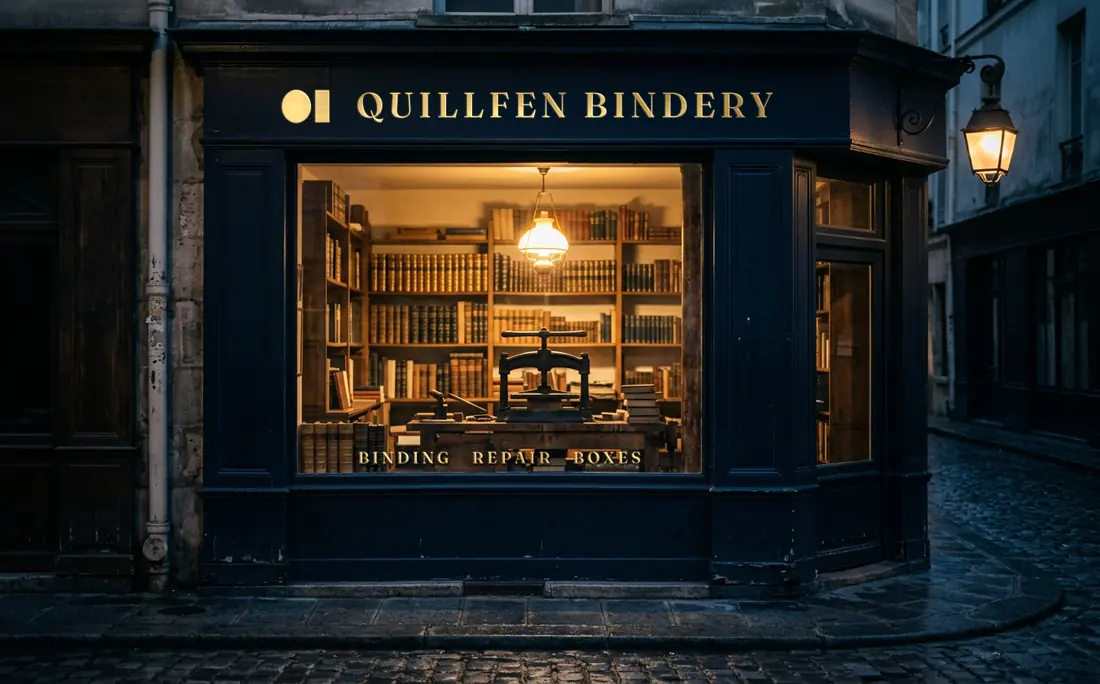
A bindery shop front at night with the mark and QUILLFEN BINDERY in gold leaf on the fascia, and Binding, Repair, Boxes gilded on the glass
Shop windowMockup
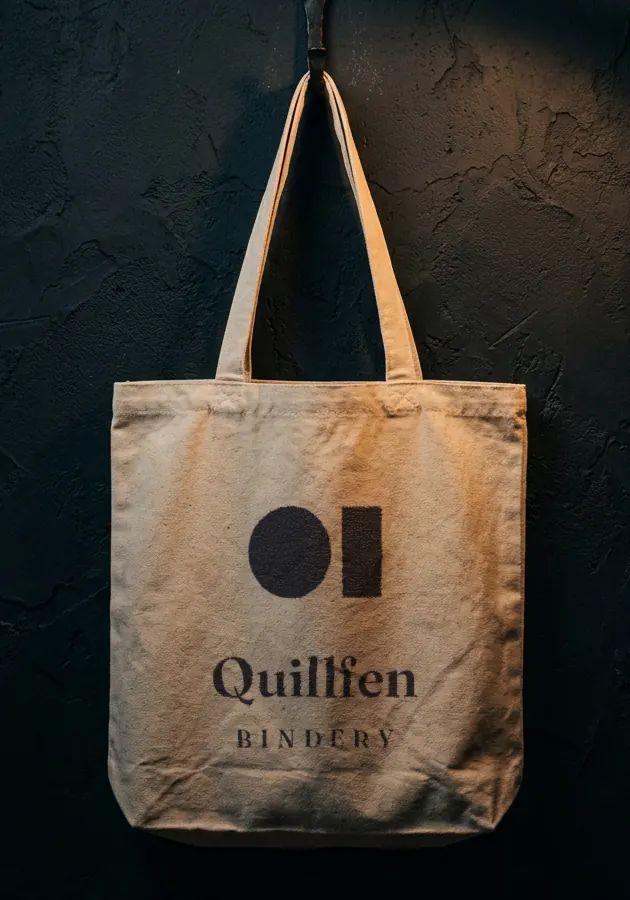
A canvas tote hanging on a hook, screen printed with the mark, Quillfen, and BINDERY
Canvas toteMockup

The squad

Eight specialists. One method. Nothing skipped.

Each step belongs to one member of the squad, who does one job and hands the work to the next. The Guide walks you through all eight and tells you why, in plain words. You never need to know design.

The squad is in build. This is how it will work.

  1. An open notebook of circled pencil notes and arrows beside a coffee cup under a desk lamp

    Step 1: Discover

    The Strategist

    Interviews you before anyone draws.

    Who it is for, what makes you different, who you compete with, logos you admire, and what you must have or avoid.

    Hands the Researcher your Brand Brief.

  2. A magnifying glass over index cards of small pencil drawings, a third of them struck through

    Step 2: Explore

    The Researcher

    Decides what the icon could show.

    Proposes 15 to 25 nouns and metaphors in groups. You add your own, then keep or kill until 10 to 15 are left. Killing what you don't want is half the job.

    Hands the Sketcher the nouns you kept.

  3. Knife-sharpened graphite pencils beside a fanned stack of simple black shape sketches

    Step 3: Sketch

    The Sketcher

    Draws simple black-and-white ideas first.

    12 to 15 icons a round, each built from your nouns and tagged with them. No color and no type, so nothing hides a weak idea. The made-up bindery above took 72 sketches across 9 rounds.

    Hands every sketch to the Critic.

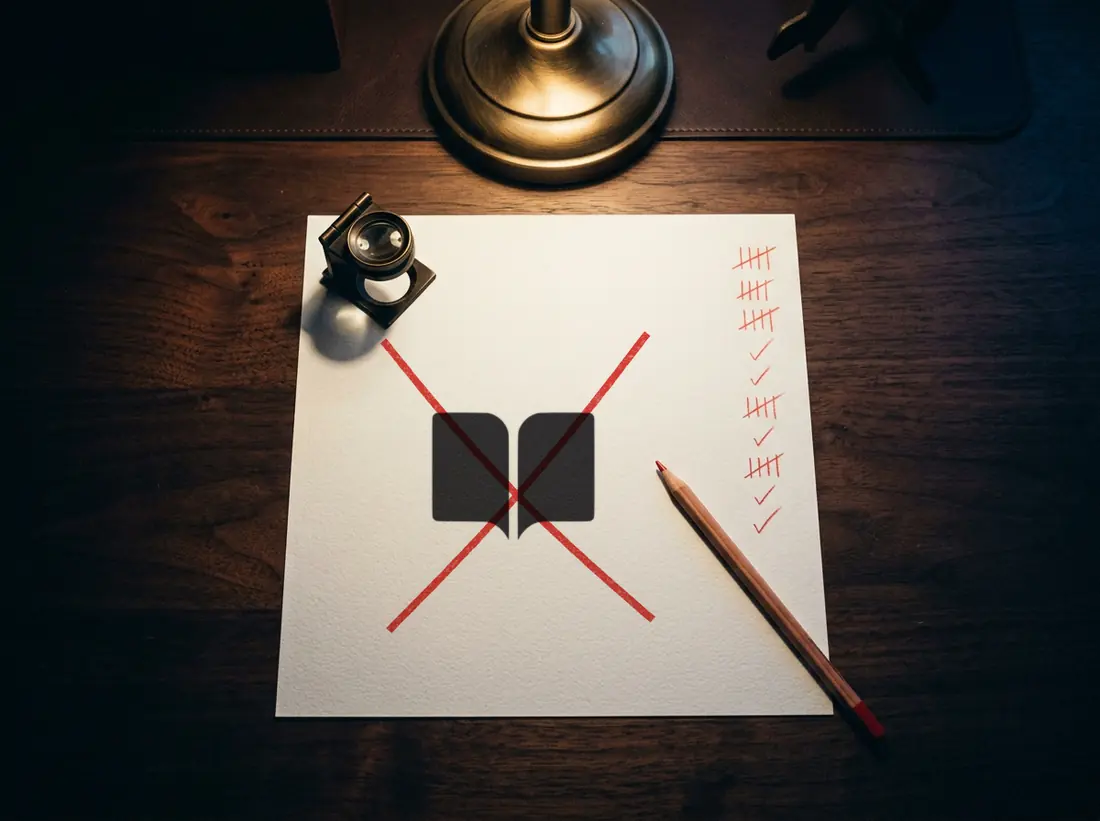
  4. The round-one open-book sketch crossed out in red pencil, with red tally marks down the margin and a loupe on the sheet

    Step 4: Score

    The Critic

    Scores every sketch before you see it.

    Three gates in order: appropriate, distinctive, simple. Seven criteria worth 75 points. Then six stress tests: 16 pixels, one color, reversed, blurred, drawn from memory, and not a known mark.

    Below the bar? Back to Sketch. Under 60 of 75, or one failed gate, and the idea is redrawn. You never see it.

    Hands the Facilitator only the marks that clear the bar.

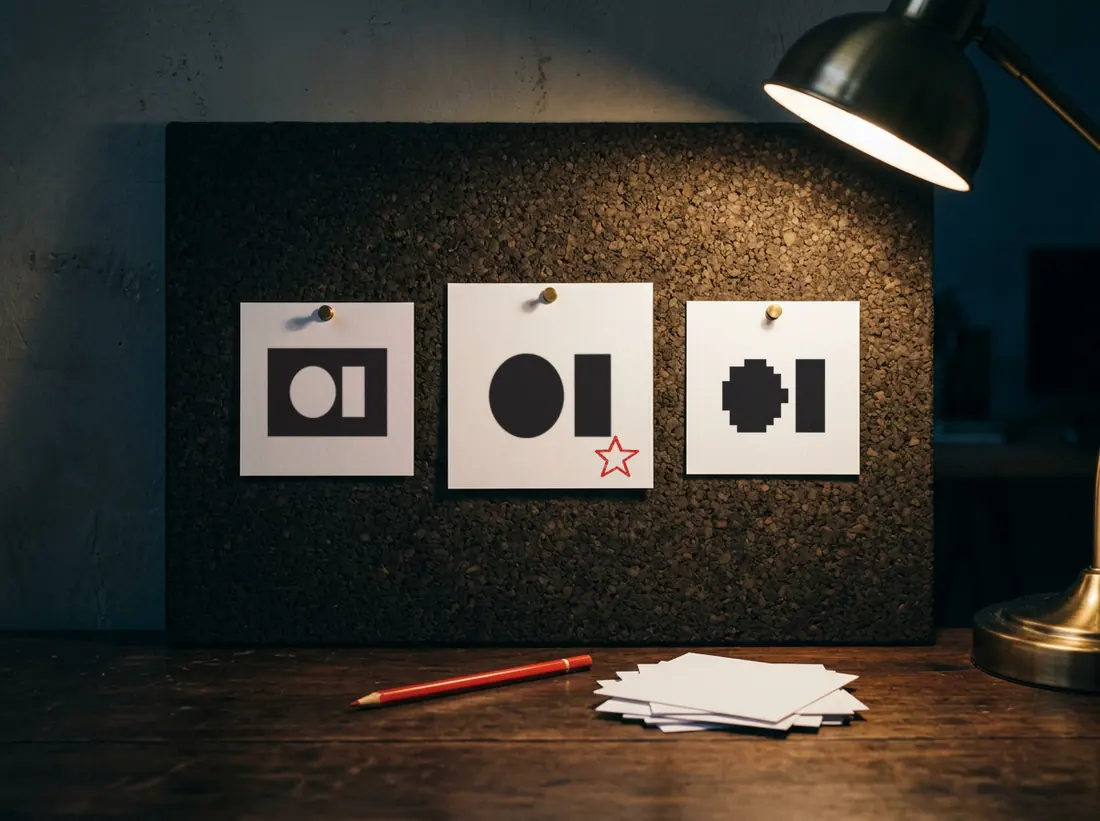
  5. Three cards pinned to a cork board: the Quillfen mark reversed, as drawn, and at 16 pixels, with the middle card starred in red pencil

    Step 5: Shortlist

    The Facilitator

    Puts the finalists in front of you and your team.

    Each mark black on white, white on black, then all together and on real things. You and your team pick three by private vote, so the loudest voice does not decide.

    Hands the Designer your top three.

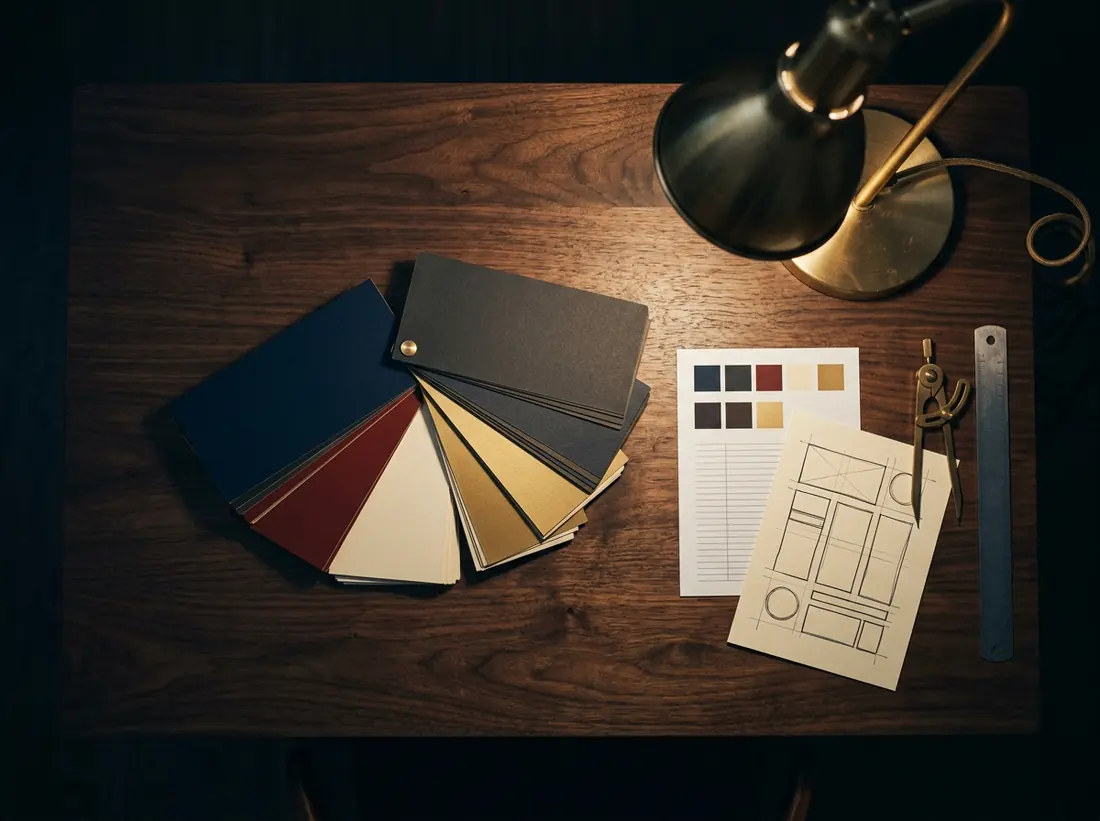
  6. Fanned color swatches, layout proofs, and a construction grid with a brass divider under a desk lamp

    Step 6: Build

    The Designer

    Turns a mark into a system.

    A construction grid, lockups, a custom wordmark, and type matched to the icon. Color waits until the black-and-white mark works, then three palettes from your brief, contrast checked.

    Hands the Finisher three systems to choose from.

  7. A steel ruler and a caliper lined up on the grid of a cutting mat, with a scalpel beside them

    Step 7: Refine

    The Finisher

    Tightens the one you choose.

    Rounds of refinement on the mark, wordmark, color, and type. Each round narrows. No new ideas sneak in at the end.

    Hands the Producer the final system.

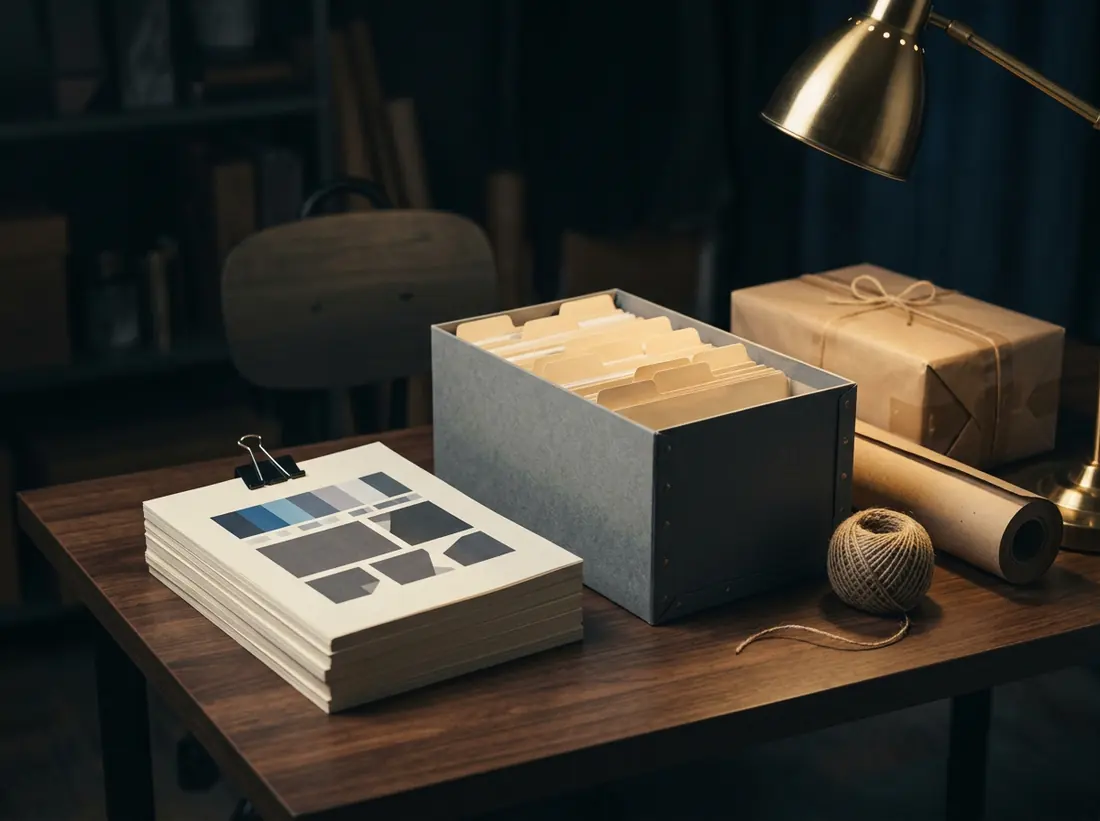
  8. A clipped stack of brand guideline pages, an archive file box, and a parcel tied with twine

    Step 8: Deliver

    The Producer

    Packs everything you need to use it.

    Editable vector files and PNGs, a guidelines book, web, app, and print assets, and a reveal you can share.

    Hands the whole brand to you.

What you walk away with

A whole brand, not a single file.

This is what the finished method hands over. The squad is building these steps now, in order, and the waitlist hears when each one opens.

  1. 01
    The mark

    Scored, refined, and finished as clean vector.

  2. 02
    A wordmark

    Your name, drawn to sit with the mark.

  3. 03
    Lockups

    Mark and name together: stacked, side by side, and alone.

  4. 04
    Type

    A type system for headlines and text, with the reasons.

  5. 05
    Color

    A palette that works on screen and in print.

  6. 06
    Brand language

    Patterns, graphics, and an icon style that match the mark.

  7. 07
    Messaging

    Positioning, a tagline, and a voice guide.

  8. 08
    Guidelines

    One book that shows how to use all of it.

  9. 09
    Web, app, and print assets

    Favicons, social images, app icons, and print-ready files.

  10. 10
    Editable files

    SVG and files your designer can open in any tool.

  11. 11
    The reveal

    The whole system presented, start to finish, ready to share.

Questions

Fair questions.

Is it live?

Not yet. Logo Squad is in build. Join the waitlist and you get a seat when the squad opens. We will not ask you to pay for anything before then.

Do I own what it makes?

The editable files are yours to use and change. One plain caveat: work made with AI has limits on copyright protection, so run a trademark search, ideally with a lawyer, before you file or build a business on a mark.

How is it different from a logo generator?

A generator hands you pictures and leaves the judging to you. Logo Squad runs a professional method and scores every concept before you see it: three gate checks, 75 points, and six stress tests, with the reasons written out. Most sketches never reach you.

What will it cost?

Pricing is not set yet. The waitlist hears first, before anything is public.

Waitlist open

Your sketch is next.

Logo Squad is in build. Leave your email and we'll write when a seat is ready. You will be among the first to run the method.

Join the waitlist

Two questions and your email. Under a minute.

Do you have a logo today? (required)

We'll email you about the beta. You can unsubscribe anytime. Privacy